Prefabrication and Modular Construction: The New Face of Housing in Ghana
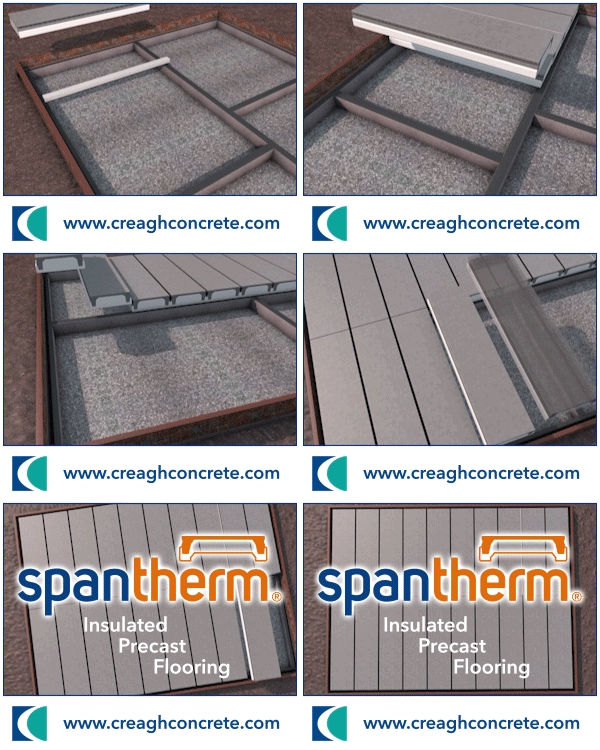
Ghana is witnessing a transformative shift in how buildings are conceived and constructed, with prefabrication and modular construction taking center stage. These innovative methods involve producing building components off-site in controlled factory settings and assembling them on-site, allowing for faster, cleaner, and more efficient construction.
The appeal of modular construction in Ghana is driven by the urgent need to address a significant housing deficit, particularly in urban centers like Accra and Kumasi. Prefabricated units can be rapidly deployed, making them ideal for affordable housing schemes, schools, hospitals, and emergency shelters.
Local companies are beginning to embrace this model, creating modular homes, container offices, and hybrid structures that meet both functional and aesthetic needs. Advances in engineering and design allow for flexibility in size, layout, and finishes, ensuring these buildings do not compromise on quality or appearance.
Pros of Prefabricated and Modular Construction in Ghana:
- Speed: Modular construction can reduce building time by up to 50% compared to traditional methods.
- Cost Efficiency: Factory production lowers labor costs and minimizes waste, making projects more budget-friendly.
- Consistency and Quality Control: Building components made in controlled environments have higher precision and fewer defects.
- Sustainability: Reduced waste and energy use during manufacturing and assembly contribute to environmental sustainability.
- Versatility: Modular structures can be customized and expanded easily, adapting to changing needs.
Cons and Challenges:
- High Initial Setup Costs: Establishing manufacturing facilities and logistics networks requires significant investment.
- Transportation Constraints: Moving large building modules to remote or densely populated areas can be challenging.
- Perception Issues: Some clients and communities may view modular buildings as inferior or temporary.
- Limited Local Expertise: The industry lacks a broad base of professionals trained in modular design and assembly.
- Regulatory Framework: Building codes and zoning regulations may not yet fully accommodate prefabricated construction.
Despite these hurdles, modular construction holds immense promise for reshaping Ghana’s built environment. It offers a scalable, efficient, and sustainable way to meet growing demand—particularly for low- to middle-income housing. With strategic investments, training, and public awareness campaigns, prefabrication could become a mainstream solution for the country’s housing and infrastructure challenges.
As the technology matures and stakeholder confidence grows, Ghana has the potential to lead the West African region in adopting modern, modular building systems that combine speed, quality, and sustainability.